Buy unterricht.eu ?
We are moving the project
unterricht.eu .
Are you interested in purchasing the domain
unterricht.eu ?
domain@kv-gmbh.de · 0541-91531010
Buy unterricht.eu ?
Can planetary orbits intersect?
No, planetary orbits cannot intersect. In our solar system, each planet orbits the sun in its own distinct path, and these paths do not cross or intersect. This is due to the gravitational forces between the planets and the sun, which keep their orbits separate and stable. If planetary orbits were to intersect, it would lead to chaotic and unstable interactions between the planets, which is not observed in our solar system. **
Why are there elliptical orbits?
Elliptical orbits occur due to the gravitational forces between celestial bodies. When an object is under the influence of a central force, such as gravity, its path will often take the shape of an ellipse. This is because the force of gravity is stronger at shorter distances, causing the object to move faster when closer to the center of mass and slower when farther away. As a result, the object follows a curved path that is elliptical in shape. **


Similar search terms for Orbits
Top-Angebote
Products related to Orbits:
-
Scholastic Teaching Resources Sight Word Readers Classroom Box SetJumpstart reading success with this irresistible collection of 125 little books that introduce and reinforce the first 50 must-know sight words! Each set includes a sturdy storage box stocked with 5 copies of 25 delightful tales—each presenting two...101,99 $*Shipping: 0,00 $Secure redirect to the provider
-
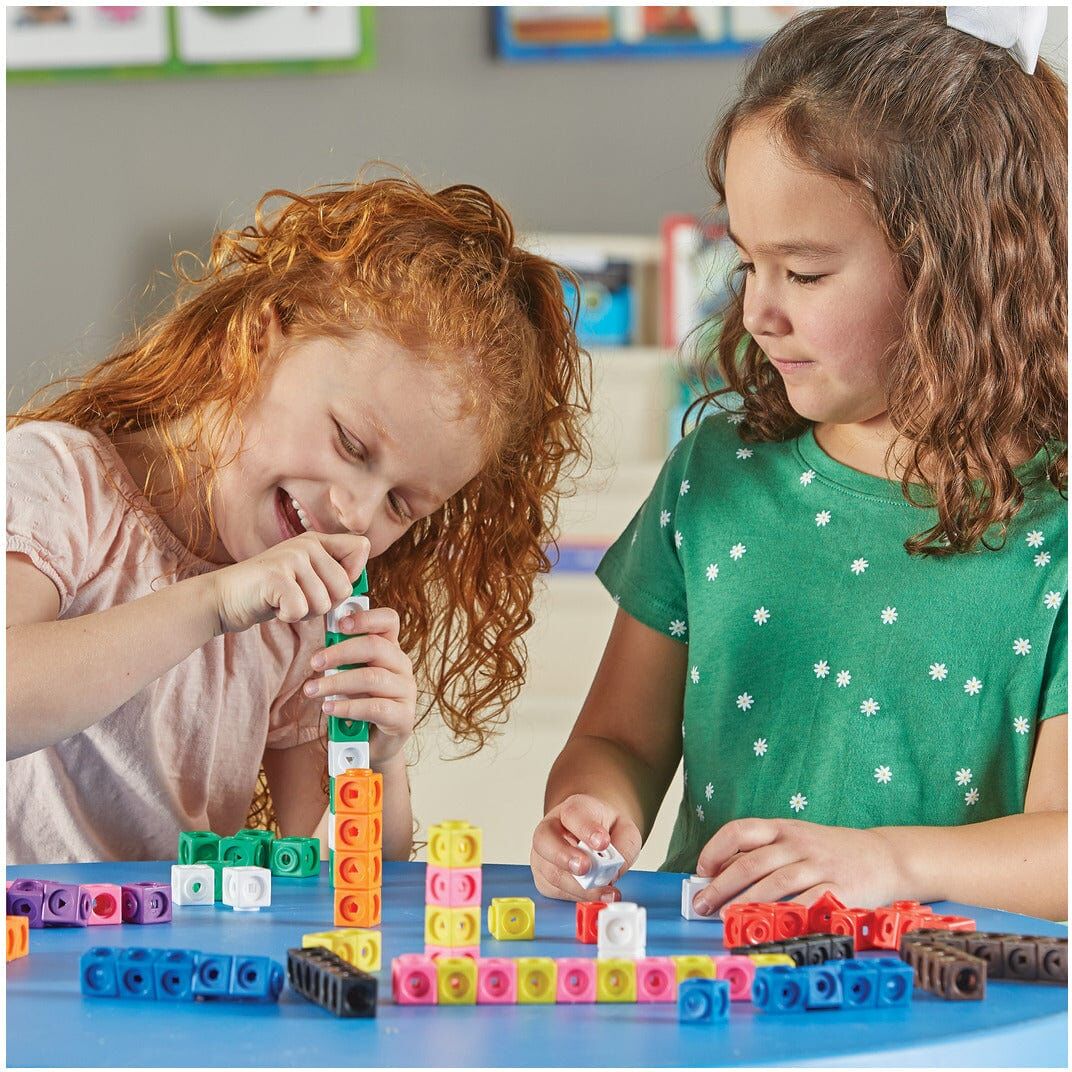
Learning Resources MathLink Cubes Set of 100 for Learning, 100 Colorful Cubes, STEM Education, Ages 3+Discover the joy of learning with the Learning Resources MathLink Cubes Set of 100. This vibrant set of interlocking cubes is perfect for hands-on math exploration, making it an excellent choice for both home and classroom settings. Each cube is designed for little hands, encouraging children to develop essential skills in counting, addition, subtraction, and early geometry. The set includes 100 colorful MathLink cubes that easily connect and disconnect, ideal for interactive learning and imaginative play. It supports STEM education and develops fine motor skills. The set also comes with activity ideas to keep children engaged. These cubes are suitable for collaborative play, letting kids work together to solve problems and build projects.10,99 £*Shipping: 1,99 £Secure redirect to the provider
-
Perfect Picks Market Montessori Reusable Learning Cards Set For Kids Early Education Writing Practice Game Montessori Reusable Learning Cards Set For Kids Early Education Writing Practice GameTurn everyday learning into a fun, handson experience with these Montessori toys designed to spark curiosity and creativity. This engaging set of reusable cards helps young children build essential skills through play, making it perfect for early...39,97 $*Shipping: 0,00 $Secure redirect to the provider
-
Tiny Tots Teens Trends Drawer Game Early Education Montessori Wooden Pitch Ball Box Preschool Learning Training Toy Drawer Game Early Education Montessori Wooden Pitch Ball Box Preschool Learning Training ToyThis Montessori Wooden Pitch Ball Box Drawer Game is a thoughtfully designed earlyeducation toy that transforms playtime into purposeful learning. Crafted for toddlers and preschoolers, it offers a handson, engaging way to support key developmental...39,97 $*Shipping: 0,00 $Secure redirect to the provider



-
On which orbits do planets move?
Planets move on elliptical orbits around the Sun. These orbits are not perfect circles but slightly elongated, with the Sun located at one of the foci of the ellipse. The gravitational pull of the Sun keeps the planets in their orbits, causing them to move in a predictable path around the Sun. **
-
Why are the planet orbits elliptical?
The planet orbits are elliptical because of the gravitational force exerted by the sun. According to Kepler's laws of planetary motion, planets move in elliptical orbits with the sun at one of the foci. This means that the gravitational force between the sun and the planet causes the planet to move in a curved path, resulting in an elliptical orbit. The shape of the orbit is determined by the balance between the planet's velocity and the gravitational force pulling it towards the sun. **
-
'Between the orbits of the planets.'
The asteroid belt is located between the orbits of Mars and Jupiter. It is a region in our solar system where millions of small rocky bodies, called asteroids, orbit the sun. The asteroid belt is thought to be the remnants of a failed planet formation, as the gravitational pull of Jupiter prevented the material in this region from coalescing into a single planet. The largest asteroid in the belt is Ceres, which is also classified as a dwarf planet. **
-
In which direction do the planetary orbits run?
The planetary orbits run counterclockwise around the Sun when viewed from above the Earth's North Pole. This means that the planets move in the same direction as the Sun's rotation. This counterclockwise motion is known as prograde motion. The planets all orbit the Sun in roughly the same plane, known as the ecliptic plane. **

Why do the planets move in elliptical orbits?
The planets move in elliptical orbits due to the gravitational force exerted by the Sun. According to Kepler's laws of planetary motion, the shape of the orbit is determined by the balance between the gravitational force pulling the planet towards the Sun and the planet's inertia trying to carry it away. This results in an elliptical path rather than a perfect circle. The eccentricity of the orbit determines how elongated or circular it is, with a value of 0 representing a perfect circle and higher values representing more elongated ellipses. **
Who discovered the elliptical orbits of the sun?
The discovery of the elliptical orbits of the sun is credited to the German astronomer Johannes Kepler. In the early 17th century, Kepler formulated his three laws of planetary motion, which described the elliptical paths that planets follow around the sun. These laws revolutionized our understanding of the solar system and laid the foundation for Isaac Newton's law of universal gravitation. **
Top-Angebote
Products related to Orbits:
-
Perfect Picks Market Kids Learning Clock Silent Analog Teaching Wall Clock For Classroom & Bedroom Inch white 10 InchTransform learning into an exciting daily adventure with this Kids learning clock designed to help children master time with confidence. Featuring colorful numbers, clearly marked hands, and an easytoread analog display, it's perfect for young...69,97 $*Shipping: 0,00 $Secure redirect to the provider
-
JoyToys Montessori Wooden Learning Clock Time Teaching Puzzle For Kids Montessori Wooden Learning Clock Time Teaching Puzzle For KidsLearn through play with our wooden learning clock, designed to help children confidently understand time while developing essential early learning skills. This engaging Montessori clock combines handson puzzle play with interactive time practice,...29,97 $*Shipping: 0,00 $Secure redirect to the provider
-
Scholastic Teaching Resources Sight Word Readers Classroom Box SetJumpstart reading success with this irresistible collection of 125 little books that introduce and reinforce the first 50 must-know sight words! Each set includes a sturdy storage box stocked with 5 copies of 25 delightful tales—each presenting two...101,99 $*Shipping: 0,00 $Secure redirect to the provider
-
Learning Resources MathLink Cubes Set of 100 for Learning, 100 Colorful Cubes, STEM Education, Ages 3+Discover the joy of learning with the Learning Resources MathLink Cubes Set of 100. This vibrant set of interlocking cubes is perfect for hands-on math exploration, making it an excellent choice for both home and classroom settings. Each cube is designed for little hands, encouraging children to develop essential skills in counting, addition, subtraction, and early geometry. The set includes 100 colorful MathLink cubes that easily connect and disconnect, ideal for interactive learning and imaginative play. It supports STEM education and develops fine motor skills. The set also comes with activity ideas to keep children engaged. These cubes are suitable for collaborative play, letting kids work together to solve problems and build projects.10,99 £*Shipping: 1,99 £Secure redirect to the provider
-
Can planetary orbits intersect?
No, planetary orbits cannot intersect. In our solar system, each planet orbits the sun in its own distinct path, and these paths do not cross or intersect. This is due to the gravitational forces between the planets and the sun, which keep their orbits separate and stable. If planetary orbits were to intersect, it would lead to chaotic and unstable interactions between the planets, which is not observed in our solar system. **
-
Why are there elliptical orbits?
Elliptical orbits occur due to the gravitational forces between celestial bodies. When an object is under the influence of a central force, such as gravity, its path will often take the shape of an ellipse. This is because the force of gravity is stronger at shorter distances, causing the object to move faster when closer to the center of mass and slower when farther away. As a result, the object follows a curved path that is elliptical in shape. **
-
On which orbits do planets move?
Planets move on elliptical orbits around the Sun. These orbits are not perfect circles but slightly elongated, with the Sun located at one of the foci of the ellipse. The gravitational pull of the Sun keeps the planets in their orbits, causing them to move in a predictable path around the Sun. **
-
Why are the planet orbits elliptical?
The planet orbits are elliptical because of the gravitational force exerted by the sun. According to Kepler's laws of planetary motion, planets move in elliptical orbits with the sun at one of the foci. This means that the gravitational force between the sun and the planet causes the planet to move in a curved path, resulting in an elliptical orbit. The shape of the orbit is determined by the balance between the planet's velocity and the gravitational force pulling it towards the sun. **
Similar search terms for Orbits
-
Perfect Picks Market Montessori Reusable Learning Cards Set For Kids Early Education Writing Practice Game Montessori Reusable Learning Cards Set For Kids Early Education Writing Practice GameTurn everyday learning into a fun, handson experience with these Montessori toys designed to spark curiosity and creativity. This engaging set of reusable cards helps young children build essential skills through play, making it perfect for early...39,97 $*Shipping: 0,00 $Secure redirect to the provider
-
Tiny Tots Teens Trends Drawer Game Early Education Montessori Wooden Pitch Ball Box Preschool Learning Training Toy Drawer Game Early Education Montessori Wooden Pitch Ball Box Preschool Learning Training ToyThis Montessori Wooden Pitch Ball Box Drawer Game is a thoughtfully designed earlyeducation toy that transforms playtime into purposeful learning. Crafted for toddlers and preschoolers, it offers a handson, engaging way to support key developmental...39,97 $*Shipping: 0,00 $Secure redirect to the provider
-
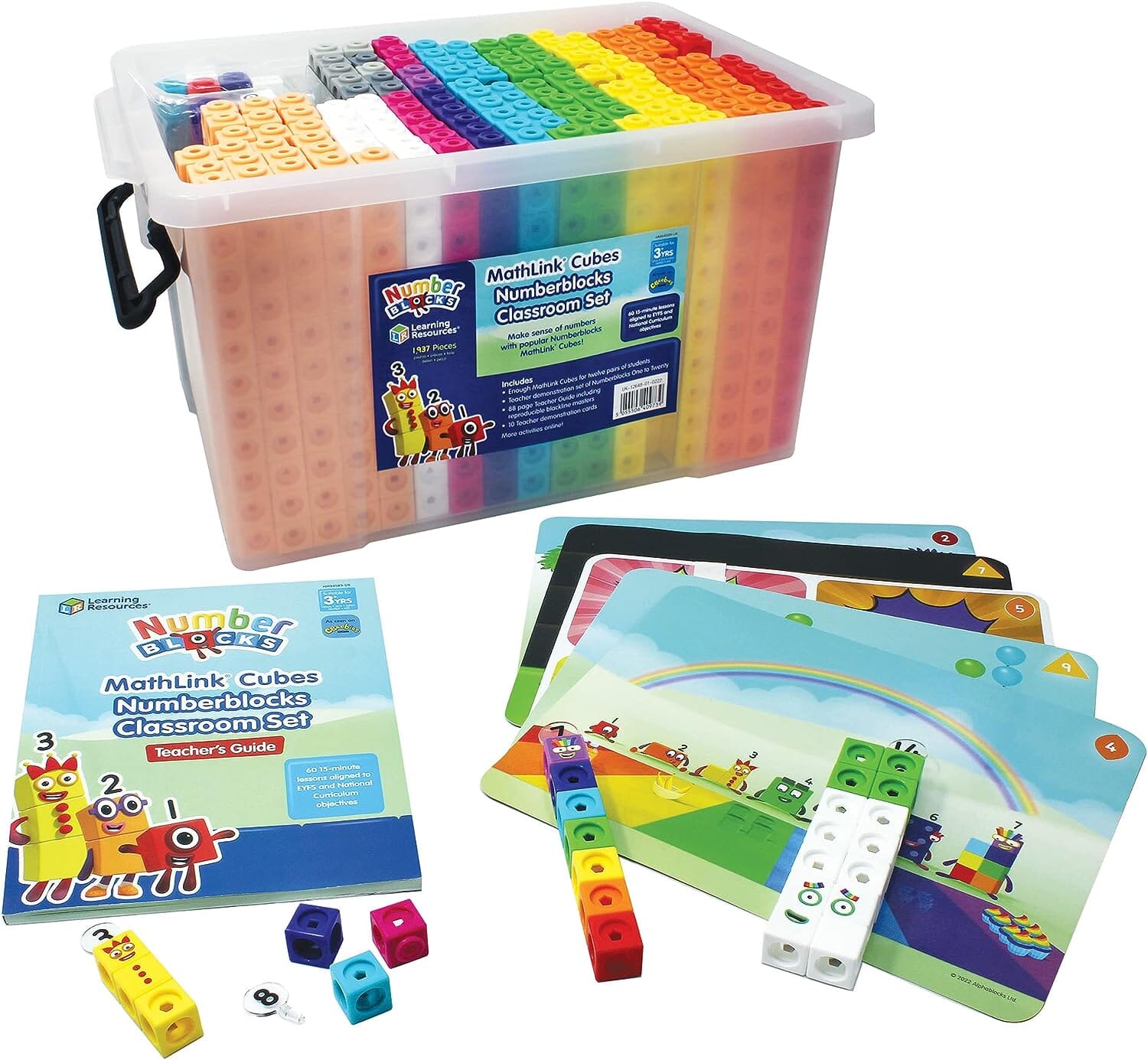
MathLink® Cubes Numberblocks Classroom Set - Ages 3+ - Educational Toy Learning ResourcesThis is the ultimate Numberblocks maths resources set developed to help teachers bring the maths concepts seen in the award-winning CBeebies TV series to life in the classroom. The set includes everything 12 pairs of pupils need to complete the 60 x 15-minute maths learning activities included in the comprehensive 88-page Teacher’s Guide. Activities align with the EYFS and National Curriculum objectives. The ultimate set for teachers to help children master maths by bringing the concepts shown in the award-winning TV series to life in the classroom. Developed to support maths learning in the classroom, this set uses the included comprehensive 88-page Teacher’s Guide to help children build essential early years maths skills including counting, place value, cardinality, subitising, composing and decomposing numbers, skip counting, addition, subtraction, and more for numbers 1-20. The quick and easy lessons incorporate group discussion and hands-on activities in 15 minutes. The Teacher’s Guide is split into three units. Unit one focuses on Numberblocks One to Five. Unit two focuses on Six to Ten, and unit three focuses on Eleven to Twenty. Lessons align with the EYFS and National Curriculum framework. The set has everything 12 pairs of pupils need to complete the activities featured in the Teacher’s Guide. Includes 1905 special edition Numberblocks MathLink Cubes, 20 Numberlings for One to Twenty, 5 double-sided demonstration cards, and the comprehensive Teacher’s Guide in a convenient storage tote.289,99 £*Shipping: 0,00 £Secure redirect to the provider
-
Perfect Picks Market Kids Learning Clock Silent Analog Teaching Wall Clock For Classroom & Bedroom Inch black 8 InchTransform learning into an exciting daily adventure with this Kids learning clock designed to help children master time with confidence. Featuring colorful numbers, clearly marked hands, and an easytoread analog display, it's perfect for young...54,97 $*Shipping: 0,00 $Secure redirect to the provider
-
'Between the orbits of the planets.'
The asteroid belt is located between the orbits of Mars and Jupiter. It is a region in our solar system where millions of small rocky bodies, called asteroids, orbit the sun. The asteroid belt is thought to be the remnants of a failed planet formation, as the gravitational pull of Jupiter prevented the material in this region from coalescing into a single planet. The largest asteroid in the belt is Ceres, which is also classified as a dwarf planet. **
-
In which direction do the planetary orbits run?
The planetary orbits run counterclockwise around the Sun when viewed from above the Earth's North Pole. This means that the planets move in the same direction as the Sun's rotation. This counterclockwise motion is known as prograde motion. The planets all orbit the Sun in roughly the same plane, known as the ecliptic plane. **
-
Why do the planets move in elliptical orbits?
The planets move in elliptical orbits due to the gravitational force exerted by the Sun. According to Kepler's laws of planetary motion, the shape of the orbit is determined by the balance between the gravitational force pulling the planet towards the Sun and the planet's inertia trying to carry it away. This results in an elliptical path rather than a perfect circle. The eccentricity of the orbit determines how elongated or circular it is, with a value of 0 representing a perfect circle and higher values representing more elongated ellipses. **
-
Who discovered the elliptical orbits of the sun?
The discovery of the elliptical orbits of the sun is credited to the German astronomer Johannes Kepler. In the early 17th century, Kepler formulated his three laws of planetary motion, which described the elliptical paths that planets follow around the sun. These laws revolutionized our understanding of the solar system and laid the foundation for Isaac Newton's law of universal gravitation. **
* All prices are inclusive of VAT and, if applicable, plus shipping costs. The offer information is based on the details provided by the respective shop and is updated through automated processes. Real-time updates do not occur, so deviations can occur in individual cases. ** Note: Parts of this content were created by AI.