Buy unterricht.eu ?
We are moving the project
unterricht.eu .
Are you interested in purchasing the domain
unterricht.eu ?
domain@kv-gmbh.de · 0541-91531010
Buy unterricht.eu ?
What is industrialization?
Industrialization is the process of transforming an economy from primarily agricultural and manual labor-based to one based on manufacturing and industry. This typically involves the introduction of new technologies, machinery, and infrastructure to increase production and efficiency. Industrialization often leads to urbanization as people move from rural areas to cities in search of employment in factories and other industrial facilities. This process has historically been associated with significant economic and social changes, including the rise of a middle class and increased standard of living for many people. **
How does industrialization influence nutrition?
Industrialization has greatly influenced nutrition by changing the way food is produced, processed, and distributed. It has led to the mass production of processed and convenience foods, which are often high in unhealthy fats, sugars, and additives. This has contributed to the rise of diet-related diseases such as obesity and diabetes. Additionally, industrialization has also led to the depletion of nutrients in the soil, affecting the nutritional quality of the food we consume. Overall, industrialization has had a significant impact on the availability and quality of food, leading to both positive and negative effects on nutrition. **


Similar search terms for Industrialization
Top-Angebote
Products related to Industrialization:
-
Scholastic Teaching Resources Sight Word Readers Classroom Box SetJumpstart reading success with this irresistible collection of 125 little books that introduce and reinforce the first 50 must-know sight words! Each set includes a sturdy storage box stocked with 5 copies of 25 delightful tales—each presenting two...101,99 $*Shipping: 0,00 $Secure redirect to the provider
-
Perfect Picks Market Montessori Reusable Learning Cards Set For Kids Early Education Writing Practice Game Montessori Reusable Learning Cards Set For Kids Early Education Writing Practice GameTurn everyday learning into a fun, handson experience with these Montessori toys designed to spark curiosity and creativity. This engaging set of reusable cards helps young children build essential skills through play, making it perfect for early...39,97 $*Shipping: 0,00 $Secure redirect to the provider
-
Tiny Tots Teens Trends Drawer Game Early Education Montessori Wooden Pitch Ball Box Preschool Learning Training Toy Drawer Game Early Education Montessori Wooden Pitch Ball Box Preschool Learning Training ToyThis Montessori Wooden Pitch Ball Box Drawer Game is a thoughtfully designed earlyeducation toy that transforms playtime into purposeful learning. Crafted for toddlers and preschoolers, it offers a handson, engaging way to support key developmental...39,97 $*Shipping: 0,00 $Secure redirect to the provider
-
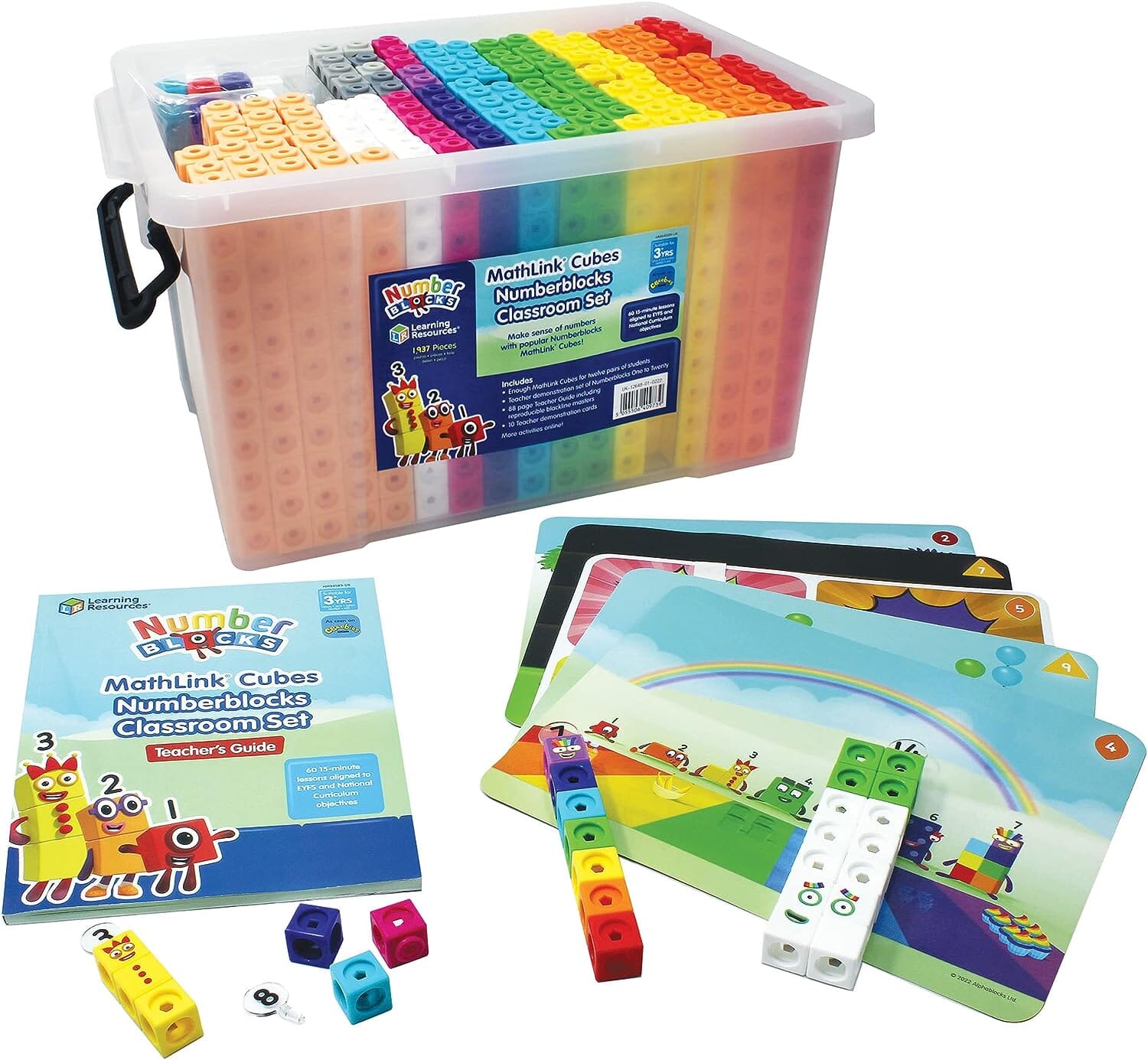
MathLink® Cubes Numberblocks Classroom Set - Ages 3+ - Educational Toy Learning ResourcesThis is the ultimate Numberblocks maths resources set developed to help teachers bring the maths concepts seen in the award-winning CBeebies TV series to life in the classroom. The set includes everything 12 pairs of pupils need to complete the 60 x 15-minute maths learning activities included in the comprehensive 88-page Teacher’s Guide. Activities align with the EYFS and National Curriculum objectives. The ultimate set for teachers to help children master maths by bringing the concepts shown in the award-winning TV series to life in the classroom. Developed to support maths learning in the classroom, this set uses the included comprehensive 88-page Teacher’s Guide to help children build essential early years maths skills including counting, place value, cardinality, subitising, composing and decomposing numbers, skip counting, addition, subtraction, and more for numbers 1-20. The quick and easy lessons incorporate group discussion and hands-on activities in 15 minutes. The Teacher’s Guide is split into three units. Unit one focuses on Numberblocks One to Five. Unit two focuses on Six to Ten, and unit three focuses on Eleven to Twenty. Lessons align with the EYFS and National Curriculum framework. The set has everything 12 pairs of pupils need to complete the activities featured in the Teacher’s Guide. Includes 1905 special edition Numberblocks MathLink Cubes, 20 Numberlings for One to Twenty, 5 double-sided demonstration cards, and the comprehensive Teacher’s Guide in a convenient storage tote.289,99 £*Shipping: 0,00 £Secure redirect to the provider



-
How did industrialization take place?
Industrialization took place through a combination of technological advancements, changes in economic systems, and shifts in social and cultural practices. The development of new machines and technologies, such as the steam engine and mechanized looms, allowed for increased production and efficiency in manufacturing. This led to the growth of factories and the mass production of goods. Additionally, changes in economic systems, such as the rise of capitalism and the expansion of markets, provided the necessary conditions for industrialization to take hold. Finally, social and cultural shifts, including urbanization and changes in labor practices, also played a role in the process of industrialization. **
-
How did socialism impact industrialization?
Socialism had a significant impact on industrialization by promoting state ownership and control of industries. This led to the nationalization of key industries, such as mining, manufacturing, and transportation, as well as the implementation of central economic planning. Socialist policies also focused on improving working conditions, increasing wages, and providing social welfare programs for workers, which contributed to the growth of the industrial workforce. However, the emphasis on state control and central planning also led to inefficiencies and lack of innovation in some socialist economies. **
-
Is there a second industrialization?
Yes, there is a second industrialization, also known as the Fourth Industrial Revolution. This new wave of industrialization is characterized by the integration of digital technologies, artificial intelligence, and automation into the manufacturing and production processes. It is transforming the way goods are produced and services are delivered, leading to increased efficiency, productivity, and innovation. The second industrialization is also impacting various industries such as healthcare, transportation, and energy, and is expected to have a significant impact on the global economy. **
-
Is industrialization still present today?
Yes, industrialization is still very much present today. Many countries around the world continue to undergo industrialization, with the development of new technologies and the expansion of manufacturing and production processes. This has led to the growth of industrial sectors in various economies, contributing to economic development and the creation of jobs. However, there is also a growing emphasis on sustainable and environmentally friendly industrial practices to mitigate the negative impact of industrialization on the environment. **


What changes did industrialization bring about?
Industrialization brought about significant changes in society, economy, and technology. It led to the growth of urban areas as people moved from rural areas to cities in search of work in factories. This shift from agriculture to industry also transformed the economy, leading to the rise of capitalism and the creation of a new social class of industrial workers. Additionally, industrialization revolutionized technology, leading to advancements in machinery, transportation, and communication that greatly increased productivity and efficiency. **
What were the advantages of industrialization?
Industrialization brought about numerous advantages, including increased production efficiency, leading to higher output levels and lower costs. It also created job opportunities for a growing population, helping to reduce unemployment rates. Additionally, industrialization spurred technological advancements and innovation, driving economic growth and improving living standards for many people. **
Top-Angebote
Products related to Industrialization:
-
Perfect Picks Market Kids Learning Clock Silent Analog Teaching Wall Clock For Classroom & Bedroom Inch white 8 InchTransform learning into an exciting daily adventure with this Kids learning clock designed to help children master time with confidence. Featuring colorful numbers, clearly marked hands, and an easytoread analog display, it's perfect for young...54,97 $*Shipping: 0,00 $Secure redirect to the provider
-
JoyToys Montessori Wooden Learning Clock Time Teaching Puzzle For Kids Montessori Wooden Learning Clock Time Teaching Puzzle For KidsLearn through play with our wooden learning clock, designed to help children confidently understand time while developing essential early learning skills. This engaging Montessori clock combines handson puzzle play with interactive time practice,...29,97 $*Shipping: 0,00 $Secure redirect to the provider
-
Scholastic Teaching Resources Sight Word Readers Classroom Box SetJumpstart reading success with this irresistible collection of 125 little books that introduce and reinforce the first 50 must-know sight words! Each set includes a sturdy storage box stocked with 5 copies of 25 delightful tales—each presenting two...101,99 $*Shipping: 0,00 $Secure redirect to the provider
-
Perfect Picks Market Montessori Reusable Learning Cards Set For Kids Early Education Writing Practice Game Montessori Reusable Learning Cards Set For Kids Early Education Writing Practice GameTurn everyday learning into a fun, handson experience with these Montessori toys designed to spark curiosity and creativity. This engaging set of reusable cards helps young children build essential skills through play, making it perfect for early...39,97 $*Shipping: 0,00 $Secure redirect to the provider
-
What is industrialization?
Industrialization is the process of transforming an economy from primarily agricultural and manual labor-based to one based on manufacturing and industry. This typically involves the introduction of new technologies, machinery, and infrastructure to increase production and efficiency. Industrialization often leads to urbanization as people move from rural areas to cities in search of employment in factories and other industrial facilities. This process has historically been associated with significant economic and social changes, including the rise of a middle class and increased standard of living for many people. **
-
How does industrialization influence nutrition?
Industrialization has greatly influenced nutrition by changing the way food is produced, processed, and distributed. It has led to the mass production of processed and convenience foods, which are often high in unhealthy fats, sugars, and additives. This has contributed to the rise of diet-related diseases such as obesity and diabetes. Additionally, industrialization has also led to the depletion of nutrients in the soil, affecting the nutritional quality of the food we consume. Overall, industrialization has had a significant impact on the availability and quality of food, leading to both positive and negative effects on nutrition. **
-
How did industrialization take place?
Industrialization took place through a combination of technological advancements, changes in economic systems, and shifts in social and cultural practices. The development of new machines and technologies, such as the steam engine and mechanized looms, allowed for increased production and efficiency in manufacturing. This led to the growth of factories and the mass production of goods. Additionally, changes in economic systems, such as the rise of capitalism and the expansion of markets, provided the necessary conditions for industrialization to take hold. Finally, social and cultural shifts, including urbanization and changes in labor practices, also played a role in the process of industrialization. **
-
How did socialism impact industrialization?
Socialism had a significant impact on industrialization by promoting state ownership and control of industries. This led to the nationalization of key industries, such as mining, manufacturing, and transportation, as well as the implementation of central economic planning. Socialist policies also focused on improving working conditions, increasing wages, and providing social welfare programs for workers, which contributed to the growth of the industrial workforce. However, the emphasis on state control and central planning also led to inefficiencies and lack of innovation in some socialist economies. **
Similar search terms for Industrialization
-
Tiny Tots Teens Trends Drawer Game Early Education Montessori Wooden Pitch Ball Box Preschool Learning Training Toy Drawer Game Early Education Montessori Wooden Pitch Ball Box Preschool Learning Training ToyThis Montessori Wooden Pitch Ball Box Drawer Game is a thoughtfully designed earlyeducation toy that transforms playtime into purposeful learning. Crafted for toddlers and preschoolers, it offers a handson, engaging way to support key developmental...39,97 $*Shipping: 0,00 $Secure redirect to the provider
-
MathLink® Cubes Numberblocks Classroom Set - Ages 3+ - Educational Toy Learning ResourcesThis is the ultimate Numberblocks maths resources set developed to help teachers bring the maths concepts seen in the award-winning CBeebies TV series to life in the classroom. The set includes everything 12 pairs of pupils need to complete the 60 x 15-minute maths learning activities included in the comprehensive 88-page Teacher’s Guide. Activities align with the EYFS and National Curriculum objectives. The ultimate set for teachers to help children master maths by bringing the concepts shown in the award-winning TV series to life in the classroom. Developed to support maths learning in the classroom, this set uses the included comprehensive 88-page Teacher’s Guide to help children build essential early years maths skills including counting, place value, cardinality, subitising, composing and decomposing numbers, skip counting, addition, subtraction, and more for numbers 1-20. The quick and easy lessons incorporate group discussion and hands-on activities in 15 minutes. The Teacher’s Guide is split into three units. Unit one focuses on Numberblocks One to Five. Unit two focuses on Six to Ten, and unit three focuses on Eleven to Twenty. Lessons align with the EYFS and National Curriculum framework. The set has everything 12 pairs of pupils need to complete the activities featured in the Teacher’s Guide. Includes 1905 special edition Numberblocks MathLink Cubes, 20 Numberlings for One to Twenty, 5 double-sided demonstration cards, and the comprehensive Teacher’s Guide in a convenient storage tote.289,99 £*Shipping: 0,00 £Secure redirect to the provider
-
Perfect Picks Market Kids Emotional Expression Mirror Early Education & Emotional Learning Toy For Toddlers pinkNurture your childs emotional intelligence with the Kids Emotional Expression Mirrora fun, interactive learning tool designed to help toddlers understand and manage their feelings. This innovative toy features six emotional expression cards and a...49,97 $*Shipping: 0,00 $Secure redirect to the provider
-
Perfect Picks Market Kids Learning Clock Silent Analog Teaching Wall Clock For Classroom & Bedroom Inch black 8 InchTransform learning into an exciting daily adventure with this Kids learning clock designed to help children master time with confidence. Featuring colorful numbers, clearly marked hands, and an easytoread analog display, it's perfect for young...54,97 $*Shipping: 0,00 $Secure redirect to the provider
-
Is there a second industrialization?
Yes, there is a second industrialization, also known as the Fourth Industrial Revolution. This new wave of industrialization is characterized by the integration of digital technologies, artificial intelligence, and automation into the manufacturing and production processes. It is transforming the way goods are produced and services are delivered, leading to increased efficiency, productivity, and innovation. The second industrialization is also impacting various industries such as healthcare, transportation, and energy, and is expected to have a significant impact on the global economy. **
-
Is industrialization still present today?
Yes, industrialization is still very much present today. Many countries around the world continue to undergo industrialization, with the development of new technologies and the expansion of manufacturing and production processes. This has led to the growth of industrial sectors in various economies, contributing to economic development and the creation of jobs. However, there is also a growing emphasis on sustainable and environmentally friendly industrial practices to mitigate the negative impact of industrialization on the environment. **
-
What changes did industrialization bring about?
Industrialization brought about significant changes in society, economy, and technology. It led to the growth of urban areas as people moved from rural areas to cities in search of work in factories. This shift from agriculture to industry also transformed the economy, leading to the rise of capitalism and the creation of a new social class of industrial workers. Additionally, industrialization revolutionized technology, leading to advancements in machinery, transportation, and communication that greatly increased productivity and efficiency. **
-
What were the advantages of industrialization?
Industrialization brought about numerous advantages, including increased production efficiency, leading to higher output levels and lower costs. It also created job opportunities for a growing population, helping to reduce unemployment rates. Additionally, industrialization spurred technological advancements and innovation, driving economic growth and improving living standards for many people. **
* All prices are inclusive of VAT and, if applicable, plus shipping costs. The offer information is based on the details provided by the respective shop and is updated through automated processes. Real-time updates do not occur, so deviations can occur in individual cases. ** Note: Parts of this content were created by AI.