Buy unterricht.eu ?
We are moving the project
unterricht.eu .
Are you interested in purchasing the domain
unterricht.eu ?
domain@kv-gmbh.de · 0541-91531010
Buy unterricht.eu ?
When was illiteracy recognized?
Illiteracy has been recognized as a social issue for centuries, with efforts to address it dating back to ancient civilizations. However, the modern recognition of illiteracy as a significant global problem can be traced back to the 20th century, with the establishment of international organizations and initiatives focused on promoting literacy and education for all. The United Nations Educational, Scientific and Cultural Organization (UNESCO) has played a key role in raising awareness about illiteracy and advocating for literacy programs around the world. Today, illiteracy continues to be a major concern, with ongoing efforts to address the issue through education and literacy initiatives. **
What are the disadvantages of illiteracy?
Illiteracy can lead to limited access to information and opportunities, as individuals may struggle to understand written instructions, fill out forms, or access educational resources. This can result in reduced job prospects and lower income potential. Illiteracy also contributes to social isolation and can lead to a lack of confidence and self-esteem. Additionally, illiteracy can have negative effects on health, as individuals may struggle to understand medical information and instructions. **


Similar search terms for Illiteracy
Top-Angebote
Products related to Illiteracy:
-
Scholastic Teaching Resources Sight Word Readers Classroom Box SetJumpstart reading success with this irresistible collection of 125 little books that introduce and reinforce the first 50 must-know sight words! Each set includes a sturdy storage box stocked with 5 copies of 25 delightful tales—each presenting two...101,99 $*Shipping: 0,00 $Secure redirect to the provider
-
Perfect Picks Market Montessori Reusable Learning Cards Set For Kids Early Education Writing Practice Game Montessori Reusable Learning Cards Set For Kids Early Education Writing Practice GameTurn everyday learning into a fun, handson experience with these Montessori toys designed to spark curiosity and creativity. This engaging set of reusable cards helps young children build essential skills through play, making it perfect for early...39,97 $*Shipping: 0,00 $Secure redirect to the provider
-
Tiny Tots Teens Trends Drawer Game Early Education Montessori Wooden Pitch Ball Box Preschool Learning Training Toy Drawer Game Early Education Montessori Wooden Pitch Ball Box Preschool Learning Training ToyThis Montessori Wooden Pitch Ball Box Drawer Game is a thoughtfully designed earlyeducation toy that transforms playtime into purposeful learning. Crafted for toddlers and preschoolers, it offers a handson, engaging way to support key developmental...39,97 $*Shipping: 0,00 $Secure redirect to the provider
-
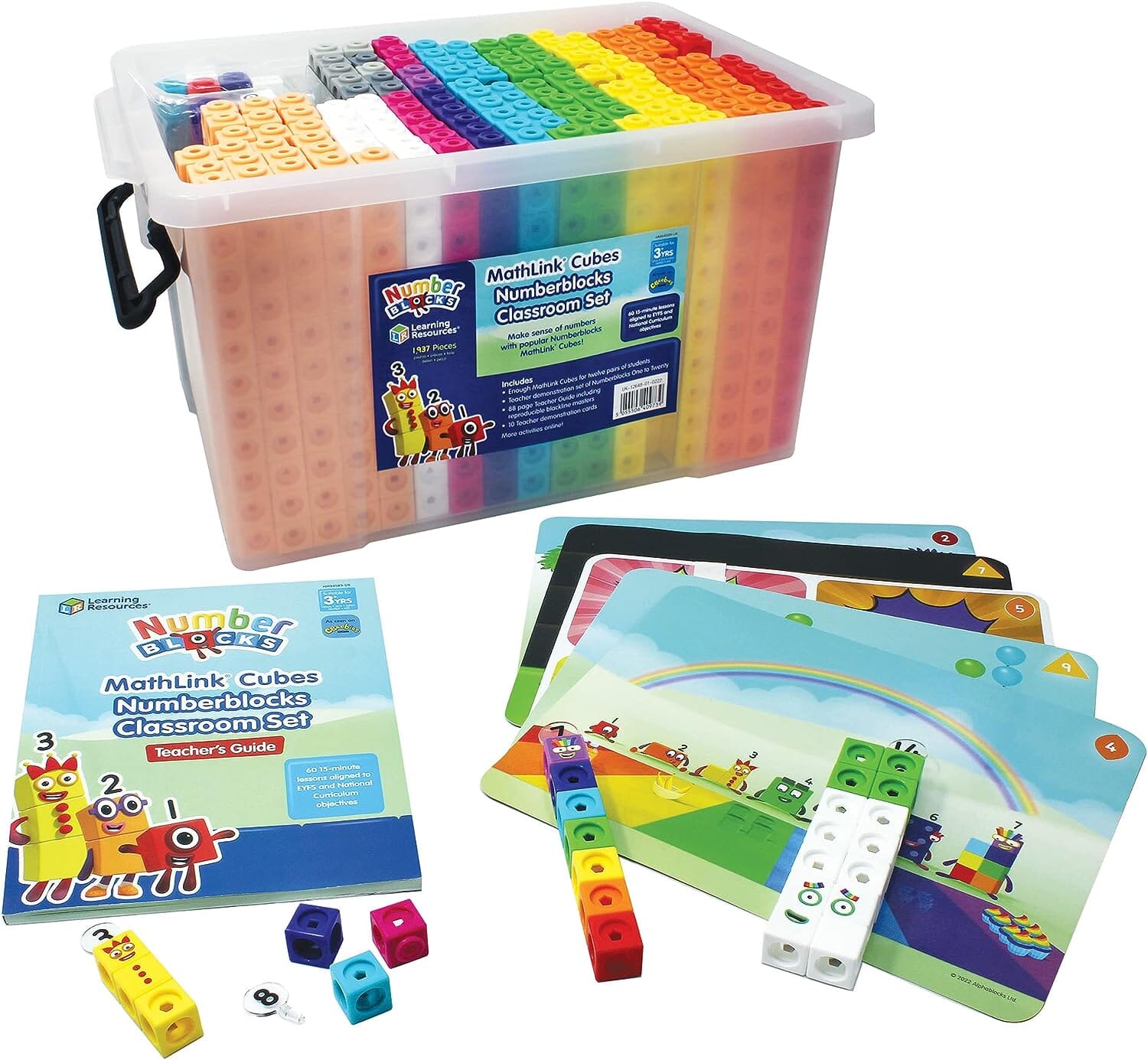
MathLink® Cubes Numberblocks Classroom Set - Ages 3+ - Educational Toy Learning ResourcesThis is the ultimate Numberblocks maths resources set developed to help teachers bring the maths concepts seen in the award-winning CBeebies TV series to life in the classroom. The set includes everything 12 pairs of pupils need to complete the 60 x 15-minute maths learning activities included in the comprehensive 88-page Teacher’s Guide. Activities align with the EYFS and National Curriculum objectives. The ultimate set for teachers to help children master maths by bringing the concepts shown in the award-winning TV series to life in the classroom. Developed to support maths learning in the classroom, this set uses the included comprehensive 88-page Teacher’s Guide to help children build essential early years maths skills including counting, place value, cardinality, subitising, composing and decomposing numbers, skip counting, addition, subtraction, and more for numbers 1-20. The quick and easy lessons incorporate group discussion and hands-on activities in 15 minutes. The Teacher’s Guide is split into three units. Unit one focuses on Numberblocks One to Five. Unit two focuses on Six to Ten, and unit three focuses on Eleven to Twenty. Lessons align with the EYFS and National Curriculum framework. The set has everything 12 pairs of pupils need to complete the activities featured in the Teacher’s Guide. Includes 1905 special edition Numberblocks MathLink Cubes, 20 Numberlings for One to Twenty, 5 double-sided demonstration cards, and the comprehensive Teacher’s Guide in a convenient storage tote.289,99 £*Shipping: 0,00 £Secure redirect to the provider



-
What is the difference between alphabet and illiteracy?
Alphabet refers to the set of letters or characters used in a language, while illiteracy refers to the inability to read or write. Alphabet is the basic building block of written language, while illiteracy is the lack of ability to understand and use written language. In other words, alphabet is the tool used for written communication, while illiteracy is the inability to utilize that tool. **
-
Can you please give a presentation about illiteracy?
Illiteracy is a significant issue that affects millions of people worldwide. It refers to the inability to read and write, which can have a profound impact on an individual's ability to access education, employment, and healthcare. Illiteracy is often linked to poverty, as those living in impoverished conditions are less likely to have access to quality education. It is important to address illiteracy through initiatives that promote literacy, provide access to education, and support adult literacy programs. By addressing illiteracy, we can empower individuals and communities to break the cycle of poverty and improve their quality of life. **
-
What do you think about the reasons for illiteracy?
Illiteracy can be attributed to a variety of factors, including lack of access to quality education, poverty, cultural barriers, and inadequate government support for literacy programs. Additionally, societal norms and gender inequalities can also play a significant role in perpetuating illiteracy. Addressing these root causes through targeted interventions, such as improving access to education, promoting gender equality, and investing in literacy programs, is crucial in combating illiteracy and empowering individuals to reach their full potential. **
-
What books are available on the topic of illiteracy?
There are numerous books available on the topic of illiteracy, covering various aspects such as its causes, consequences, and potential solutions. Some notable titles include "The Literacy Wars: Why Teaching Children to Read and Write is a Battleground in America" by Ilana Garon, "The Shame of the Nation: The Restoration of Apartheid Schooling in America" by Jonathan Kozol, and "Reading with Patrick: A Teacher, a Student, and a Life-Changing Friendship" by Michelle Kuo. These books provide insights into the challenges faced by illiterate individuals and the efforts being made to address this issue. **


How can the definition of illiteracy be better formulated?
The definition of illiteracy can be better formulated by taking into account the various dimensions of literacy, including not just the ability to read and write, but also critical thinking, digital literacy, and numeracy skills. A more comprehensive definition should also consider the cultural and linguistic diversity of different populations, as well as the impact of socio-economic factors on literacy levels. Additionally, the definition should recognize that illiteracy is a dynamic concept that can change over time, and should be measured in a way that reflects the evolving nature of literacy in the modern world. **
How could one structure a research paper on the topic of illiteracy?
A research paper on the topic of illiteracy could be structured in the following way: 1. Introduction: Provide an overview of the issue of illiteracy, its prevalence, and its impact on individuals and society. 2. Literature Review: Review existing research and literature on illiteracy, including its causes, consequences, and potential solutions. 3. Methodology: Describe the methods used to gather data and information for the research paper, such as surveys, interviews, or analysis of existing data. 4. Findings: Present the findings of the research, including statistics on illiteracy rates, the impact of illiteracy on individuals and communities, and potential barriers to addressing the issue. 5. Discussion: Analyze the findings and discuss their implications for addressing illiteracy, including potential interventions and policies to improve literacy rates. 6. Conclusion: Summarize the key findings and implications of the research, and make recommendations for future research and action to address the issue of illiteracy. **
Top-Angebote
Products related to Illiteracy:
-
Perfect Picks Market Kids Learning Clock Silent Analog Teaching Wall Clock For Classroom & Bedroom Inch black 10 InchTransform learning into an exciting daily adventure with this Kids learning clock designed to help children master time with confidence. Featuring colorful numbers, clearly marked hands, and an easytoread analog display, it's perfect for young...69,97 $*Shipping: 0,00 $Secure redirect to the provider
-
JoyToys Montessori Wooden Learning Clock Time Teaching Puzzle For Kids Montessori Wooden Learning Clock Time Teaching Puzzle For KidsLearn through play with our wooden learning clock, designed to help children confidently understand time while developing essential early learning skills. This engaging Montessori clock combines handson puzzle play with interactive time practice,...29,97 $*Shipping: 0,00 $Secure redirect to the provider
-
Scholastic Teaching Resources Sight Word Readers Classroom Box SetJumpstart reading success with this irresistible collection of 125 little books that introduce and reinforce the first 50 must-know sight words! Each set includes a sturdy storage box stocked with 5 copies of 25 delightful tales—each presenting two...101,99 $*Shipping: 0,00 $Secure redirect to the provider
-
Perfect Picks Market Montessori Reusable Learning Cards Set For Kids Early Education Writing Practice Game Montessori Reusable Learning Cards Set For Kids Early Education Writing Practice GameTurn everyday learning into a fun, handson experience with these Montessori toys designed to spark curiosity and creativity. This engaging set of reusable cards helps young children build essential skills through play, making it perfect for early...39,97 $*Shipping: 0,00 $Secure redirect to the provider
-
When was illiteracy recognized?
Illiteracy has been recognized as a social issue for centuries, with efforts to address it dating back to ancient civilizations. However, the modern recognition of illiteracy as a significant global problem can be traced back to the 20th century, with the establishment of international organizations and initiatives focused on promoting literacy and education for all. The United Nations Educational, Scientific and Cultural Organization (UNESCO) has played a key role in raising awareness about illiteracy and advocating for literacy programs around the world. Today, illiteracy continues to be a major concern, with ongoing efforts to address the issue through education and literacy initiatives. **
-
What are the disadvantages of illiteracy?
Illiteracy can lead to limited access to information and opportunities, as individuals may struggle to understand written instructions, fill out forms, or access educational resources. This can result in reduced job prospects and lower income potential. Illiteracy also contributes to social isolation and can lead to a lack of confidence and self-esteem. Additionally, illiteracy can have negative effects on health, as individuals may struggle to understand medical information and instructions. **
-
What is the difference between alphabet and illiteracy?
Alphabet refers to the set of letters or characters used in a language, while illiteracy refers to the inability to read or write. Alphabet is the basic building block of written language, while illiteracy is the lack of ability to understand and use written language. In other words, alphabet is the tool used for written communication, while illiteracy is the inability to utilize that tool. **
-
Can you please give a presentation about illiteracy?
Illiteracy is a significant issue that affects millions of people worldwide. It refers to the inability to read and write, which can have a profound impact on an individual's ability to access education, employment, and healthcare. Illiteracy is often linked to poverty, as those living in impoverished conditions are less likely to have access to quality education. It is important to address illiteracy through initiatives that promote literacy, provide access to education, and support adult literacy programs. By addressing illiteracy, we can empower individuals and communities to break the cycle of poverty and improve their quality of life. **
Similar search terms for Illiteracy
-
Tiny Tots Teens Trends Drawer Game Early Education Montessori Wooden Pitch Ball Box Preschool Learning Training Toy Drawer Game Early Education Montessori Wooden Pitch Ball Box Preschool Learning Training ToyThis Montessori Wooden Pitch Ball Box Drawer Game is a thoughtfully designed earlyeducation toy that transforms playtime into purposeful learning. Crafted for toddlers and preschoolers, it offers a handson, engaging way to support key developmental...39,97 $*Shipping: 0,00 $Secure redirect to the provider
-
MathLink® Cubes Numberblocks Classroom Set - Ages 3+ - Educational Toy Learning ResourcesThis is the ultimate Numberblocks maths resources set developed to help teachers bring the maths concepts seen in the award-winning CBeebies TV series to life in the classroom. The set includes everything 12 pairs of pupils need to complete the 60 x 15-minute maths learning activities included in the comprehensive 88-page Teacher’s Guide. Activities align with the EYFS and National Curriculum objectives. The ultimate set for teachers to help children master maths by bringing the concepts shown in the award-winning TV series to life in the classroom. Developed to support maths learning in the classroom, this set uses the included comprehensive 88-page Teacher’s Guide to help children build essential early years maths skills including counting, place value, cardinality, subitising, composing and decomposing numbers, skip counting, addition, subtraction, and more for numbers 1-20. The quick and easy lessons incorporate group discussion and hands-on activities in 15 minutes. The Teacher’s Guide is split into three units. Unit one focuses on Numberblocks One to Five. Unit two focuses on Six to Ten, and unit three focuses on Eleven to Twenty. Lessons align with the EYFS and National Curriculum framework. The set has everything 12 pairs of pupils need to complete the activities featured in the Teacher’s Guide. Includes 1905 special edition Numberblocks MathLink Cubes, 20 Numberlings for One to Twenty, 5 double-sided demonstration cards, and the comprehensive Teacher’s Guide in a convenient storage tote.289,99 £*Shipping: 0,00 £Secure redirect to the provider
-
Perfect Picks Market Kids Emotional Expression Mirror Early Education & Emotional Learning Toy For Toddlers pinkNurture your childs emotional intelligence with the Kids Emotional Expression Mirrora fun, interactive learning tool designed to help toddlers understand and manage their feelings. This innovative toy features six emotional expression cards and a...49,97 $*Shipping: 0,00 $Secure redirect to the provider
-
Perfect Picks Market Kids Learning Clock Silent Analog Teaching Wall Clock For Classroom & Bedroom Inch black 8 InchTransform learning into an exciting daily adventure with this Kids learning clock designed to help children master time with confidence. Featuring colorful numbers, clearly marked hands, and an easytoread analog display, it's perfect for young...54,97 $*Shipping: 0,00 $Secure redirect to the provider
-
What do you think about the reasons for illiteracy?
Illiteracy can be attributed to a variety of factors, including lack of access to quality education, poverty, cultural barriers, and inadequate government support for literacy programs. Additionally, societal norms and gender inequalities can also play a significant role in perpetuating illiteracy. Addressing these root causes through targeted interventions, such as improving access to education, promoting gender equality, and investing in literacy programs, is crucial in combating illiteracy and empowering individuals to reach their full potential. **
-
What books are available on the topic of illiteracy?
There are numerous books available on the topic of illiteracy, covering various aspects such as its causes, consequences, and potential solutions. Some notable titles include "The Literacy Wars: Why Teaching Children to Read and Write is a Battleground in America" by Ilana Garon, "The Shame of the Nation: The Restoration of Apartheid Schooling in America" by Jonathan Kozol, and "Reading with Patrick: A Teacher, a Student, and a Life-Changing Friendship" by Michelle Kuo. These books provide insights into the challenges faced by illiterate individuals and the efforts being made to address this issue. **
-
How can the definition of illiteracy be better formulated?
The definition of illiteracy can be better formulated by taking into account the various dimensions of literacy, including not just the ability to read and write, but also critical thinking, digital literacy, and numeracy skills. A more comprehensive definition should also consider the cultural and linguistic diversity of different populations, as well as the impact of socio-economic factors on literacy levels. Additionally, the definition should recognize that illiteracy is a dynamic concept that can change over time, and should be measured in a way that reflects the evolving nature of literacy in the modern world. **
-
How could one structure a research paper on the topic of illiteracy?
A research paper on the topic of illiteracy could be structured in the following way: 1. Introduction: Provide an overview of the issue of illiteracy, its prevalence, and its impact on individuals and society. 2. Literature Review: Review existing research and literature on illiteracy, including its causes, consequences, and potential solutions. 3. Methodology: Describe the methods used to gather data and information for the research paper, such as surveys, interviews, or analysis of existing data. 4. Findings: Present the findings of the research, including statistics on illiteracy rates, the impact of illiteracy on individuals and communities, and potential barriers to addressing the issue. 5. Discussion: Analyze the findings and discuss their implications for addressing illiteracy, including potential interventions and policies to improve literacy rates. 6. Conclusion: Summarize the key findings and implications of the research, and make recommendations for future research and action to address the issue of illiteracy. **
* All prices are inclusive of VAT and, if applicable, plus shipping costs. The offer information is based on the details provided by the respective shop and is updated through automated processes. Real-time updates do not occur, so deviations can occur in individual cases. ** Note: Parts of this content were created by AI.