Buy unterricht.eu ?
We are moving the project
unterricht.eu .
Are you interested in purchasing the domain
unterricht.eu ?
domain@kv-gmbh.de · 0541-91531010
Buy unterricht.eu ?
Are grades important in education?
Grades can be important in education as they provide a measure of a student's understanding and performance in a particular subject. They can also serve as a motivating factor for students to strive for academic excellence. However, it is also important to recognize that grades do not always accurately reflect a student's true abilities and potential. It is essential for educators to consider other factors such as effort, improvement, and individual learning styles when assessing a student's progress. Ultimately, while grades can be a useful tool, they should not be the sole focus of education. **
Do poor grades jeopardize education?
Poor grades can jeopardize education by limiting opportunities for further education and career advancement. Lower grades can impact a student's ability to gain admission to higher education institutions or qualify for scholarships and financial aid. Additionally, poor academic performance can affect a student's self-esteem and motivation, leading to disengagement from the learning process. It is important for students to seek support and resources to improve their academic performance and prevent it from jeopardizing their education. **


Similar search terms for Grades
Top-Angebote
Products related to Grades:
-
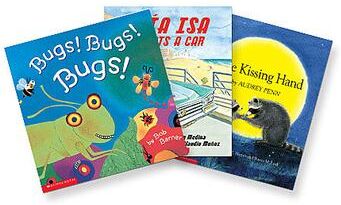
Scholastic Bargain Book Box Grades K-1 (100 Books)A box of books at the best price! Take advantage of inventory conditions that leave some of our books without a permanent home. The list of titles in this collection will change depending on availability. A super way to save money and send every...235,00 $*Shipping: 0,00 $Secure redirect to the provider
-
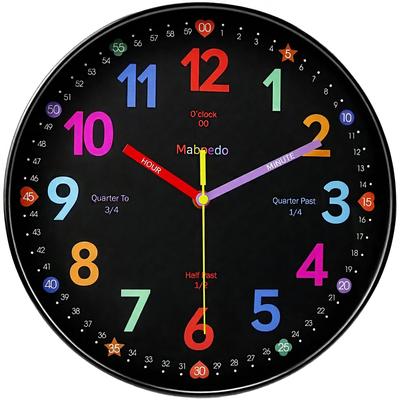
Perfect Picks Market Kids Learning Clock Silent Analog Teaching Wall Clock For Classroom & Bedroom Inch black 10 InchTransform learning into an exciting daily adventure with this Kids learning clock designed to help children master time with confidence. Featuring colorful numbers, clearly marked hands, and an easytoread analog display, it's perfect for young...69,97 $*Shipping: 0,00 $Secure redirect to the provider
-
Scholastic Bargain Book Box Grades 2-3 (100 Books)A box of books at the best price! Take advantage of inventory conditions that leave some of our books without a permanent home. The list of titles in this collection will change depending on availability. A super way to save money and send every...235,00 $*Shipping: 0,00 $Secure redirect to the provider


-
Are grades important after completing education?
Grades can be important after completing education, as they can impact job opportunities and further education opportunities. Some employers and graduate programs may consider a candidate's academic performance when making decisions. However, grades are not the only factor that employers and graduate programs consider, as work experience, skills, and personal qualities also play a significant role. Ultimately, while grades can be important, they are not the sole determinant of success after completing education. **
-
How are the grades in physical education?
The grades in physical education are based on participation, effort, skill development, and knowledge of the subject matter. Students are typically graded on their performance in various physical activities, such as sports, fitness tests, and teamwork exercises. The goal is to encourage students to lead a healthy and active lifestyle while also developing their physical abilities and knowledge of different sports and activities. Grades in physical education can vary depending on the specific curriculum and assessment criteria set by the school or teacher. **
-
Which grades are relevant for the education?
All grades are relevant for education as they build upon each other to provide a comprehensive learning experience. Each grade introduces new concepts and skills that are necessary for academic and personal development. Therefore, it is important to focus on learning and understanding the material in each grade to ensure a strong foundation for future academic success. **
-
Are the grades in physical education unfair?
It is difficult to make a blanket statement about the fairness of grades in physical education, as it can vary greatly depending on the specific circumstances. In some cases, grading in physical education may be unfair if it is based solely on natural athletic ability rather than effort and improvement. Additionally, if the grading criteria are unclear or subjective, it can lead to unfairness. However, in many cases, physical education grades are based on a combination of participation, effort, skill development, and knowledge of the subject, which can be fair and reflective of a student's performance. Ultimately, the fairness of grades in physical education depends on the specific criteria and how they are applied. **


What does the curriculum for psychology look like in the upper grades?
In the upper grades, the curriculum for psychology typically becomes more specialized and in-depth. Students may study advanced topics such as abnormal psychology, cognitive psychology, social psychology, and developmental psychology. They may also delve into research methods and statistics in psychology, as well as ethical considerations in the field. Upper-grade psychology courses often involve more critical thinking, analysis of case studies, and research projects to deepen students' understanding of psychological concepts. **
What does the math curriculum for grades Q1 to Q4 look like?
The math curriculum for grades Q1 to Q4 focuses on building a strong foundation in mathematical concepts and skills. In Q1, students will learn about basic arithmetic operations, place value, and simple fractions. In Q2, they will progress to more advanced operations, measurement, and geometry. Q3 will cover topics such as decimals, percentages, and basic algebraic concepts. Finally, in Q4, students will delve into more complex algebra, geometry, and problem-solving skills. Throughout the curriculum, there will be an emphasis on developing critical thinking, problem-solving, and mathematical reasoning abilities. **
Top-Angebote
Products related to Grades:
-
Learning Resources Math Tools Resource Kit: Grades K-1Support student success and raise key math standards of kindergartners and first graders with this Math Tools Resource Kit! Use the sets at independent stations or as shared resources during small-group instruction—three sets of reference cards...149,99 $*Shipping: 0,00 $Secure redirect to the provider
-
Scholastic Bargain Book Box Grades K-1 (100 Books)A box of books at the best price! Take advantage of inventory conditions that leave some of our books without a permanent home. The list of titles in this collection will change depending on availability. A super way to save money and send every...235,00 $*Shipping: 0,00 $Secure redirect to the provider
-
Are grades important in education?
Grades can be important in education as they provide a measure of a student's understanding and performance in a particular subject. They can also serve as a motivating factor for students to strive for academic excellence. However, it is also important to recognize that grades do not always accurately reflect a student's true abilities and potential. It is essential for educators to consider other factors such as effort, improvement, and individual learning styles when assessing a student's progress. Ultimately, while grades can be a useful tool, they should not be the sole focus of education. **
-
Do poor grades jeopardize education?
Poor grades can jeopardize education by limiting opportunities for further education and career advancement. Lower grades can impact a student's ability to gain admission to higher education institutions or qualify for scholarships and financial aid. Additionally, poor academic performance can affect a student's self-esteem and motivation, leading to disengagement from the learning process. It is important for students to seek support and resources to improve their academic performance and prevent it from jeopardizing their education. **
-
Are grades important after completing education?
Grades can be important after completing education, as they can impact job opportunities and further education opportunities. Some employers and graduate programs may consider a candidate's academic performance when making decisions. However, grades are not the only factor that employers and graduate programs consider, as work experience, skills, and personal qualities also play a significant role. Ultimately, while grades can be important, they are not the sole determinant of success after completing education. **
-
How are the grades in physical education?
The grades in physical education are based on participation, effort, skill development, and knowledge of the subject matter. Students are typically graded on their performance in various physical activities, such as sports, fitness tests, and teamwork exercises. The goal is to encourage students to lead a healthy and active lifestyle while also developing their physical abilities and knowledge of different sports and activities. Grades in physical education can vary depending on the specific curriculum and assessment criteria set by the school or teacher. **
Similar search terms for Grades
-
Perfect Picks Market Kids Learning Clock Silent Analog Teaching Wall Clock For Classroom & Bedroom Inch black 10 InchTransform learning into an exciting daily adventure with this Kids learning clock designed to help children master time with confidence. Featuring colorful numbers, clearly marked hands, and an easytoread analog display, it's perfect for young...69,97 $*Shipping: 0,00 $Secure redirect to the provider
-
Scholastic Bargain Book Box Grades 2-3 (100 Books)A box of books at the best price! Take advantage of inventory conditions that leave some of our books without a permanent home. The list of titles in this collection will change depending on availability. A super way to save money and send every...235,00 $*Shipping: 0,00 $Secure redirect to the provider
-
Scholastic Bargain Book Box Grades 4-6 (100 Books)A box of books at the best price! Take advantage of inventory conditions that leave some of our books without a permanent home. The list of titles in this collection will change depending on availability. A super way to save money and send every...235,00 $*Shipping: 0,00 $Secure redirect to the provider
-
Perfect Picks Market Kids Learning Clock Silent Analog Teaching Wall Clock For Classroom & Bedroom Inch white 10 InchTransform learning into an exciting daily adventure with this Kids learning clock designed to help children master time with confidence. Featuring colorful numbers, clearly marked hands, and an easytoread analog display, it's perfect for young...69,97 $*Shipping: 0,00 $Secure redirect to the provider
-
Which grades are relevant for the education?
All grades are relevant for education as they build upon each other to provide a comprehensive learning experience. Each grade introduces new concepts and skills that are necessary for academic and personal development. Therefore, it is important to focus on learning and understanding the material in each grade to ensure a strong foundation for future academic success. **
-
Are the grades in physical education unfair?
It is difficult to make a blanket statement about the fairness of grades in physical education, as it can vary greatly depending on the specific circumstances. In some cases, grading in physical education may be unfair if it is based solely on natural athletic ability rather than effort and improvement. Additionally, if the grading criteria are unclear or subjective, it can lead to unfairness. However, in many cases, physical education grades are based on a combination of participation, effort, skill development, and knowledge of the subject, which can be fair and reflective of a student's performance. Ultimately, the fairness of grades in physical education depends on the specific criteria and how they are applied. **
-
What does the curriculum for psychology look like in the upper grades?
In the upper grades, the curriculum for psychology typically becomes more specialized and in-depth. Students may study advanced topics such as abnormal psychology, cognitive psychology, social psychology, and developmental psychology. They may also delve into research methods and statistics in psychology, as well as ethical considerations in the field. Upper-grade psychology courses often involve more critical thinking, analysis of case studies, and research projects to deepen students' understanding of psychological concepts. **
-
What does the math curriculum for grades Q1 to Q4 look like?
The math curriculum for grades Q1 to Q4 focuses on building a strong foundation in mathematical concepts and skills. In Q1, students will learn about basic arithmetic operations, place value, and simple fractions. In Q2, they will progress to more advanced operations, measurement, and geometry. Q3 will cover topics such as decimals, percentages, and basic algebraic concepts. Finally, in Q4, students will delve into more complex algebra, geometry, and problem-solving skills. Throughout the curriculum, there will be an emphasis on developing critical thinking, problem-solving, and mathematical reasoning abilities. **
* All prices are inclusive of VAT and, if applicable, plus shipping costs. The offer information is based on the details provided by the respective shop and is updated through automated processes. Real-time updates do not occur, so deviations can occur in individual cases. ** Note: Parts of this content were created by AI.