Buy unterricht.eu ?
We are moving the project
unterricht.eu .
Are you interested in purchasing the domain
unterricht.eu ?
domain@kv-gmbh.de · 0541-91531010
Buy unterricht.eu ?
What is the handout elaboration on evolution up to now?
The handout elaboration on evolution up to now has covered the basic principles of evolution, such as natural selection, genetic variation, and adaptation. It has also discussed the evidence for evolution, including fossil records, comparative anatomy, and molecular biology. Additionally, the handout has explored the mechanisms of evolution, such as genetic drift, gene flow, and mutations. Overall, the handout has provided a comprehensive overview of the theory of evolution and how it explains the diversity of life on Earth. **
What is the motivation phase, elaboration phase, and completion phase?
The motivation phase is the initial stage where individuals are inspired or driven to start a task or project. It involves setting goals, identifying reasons for taking action, and building momentum. The elaboration phase is where the details and plans are fleshed out, strategies are developed, and resources are gathered to move forward with the task. The completion phase is the final stage where the task is finished, goals are achieved, and outcomes are evaluated. It involves wrapping up loose ends, celebrating successes, and reflecting on the process. **


Similar search terms for Elaboration
Top-Angebote
Products related to Elaboration:
-
Scholastic Teaching Resources Sight Word Readers Classroom Box SetJumpstart reading success with this irresistible collection of 125 little books that introduce and reinforce the first 50 must-know sight words! Each set includes a sturdy storage box stocked with 5 copies of 25 delightful tales—each presenting two...101,99 $*Shipping: 0,00 $Secure redirect to the provider
-
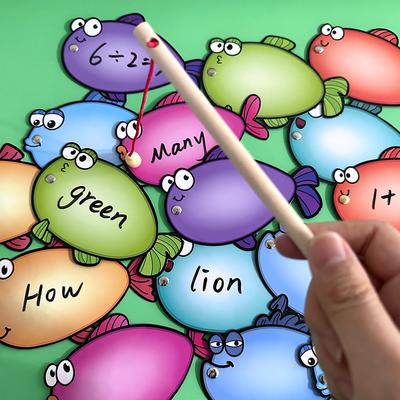
Perfect Picks Market Montessori Reusable Learning Cards Set For Kids Early Education Writing Practice Game Montessori Reusable Learning Cards Set For Kids Early Education Writing Practice GameTurn everyday learning into a fun, handson experience with these Montessori toys designed to spark curiosity and creativity. This engaging set of reusable cards helps young children build essential skills through play, making it perfect for early...39,97 $*Shipping: 0,00 $Secure redirect to the provider
-
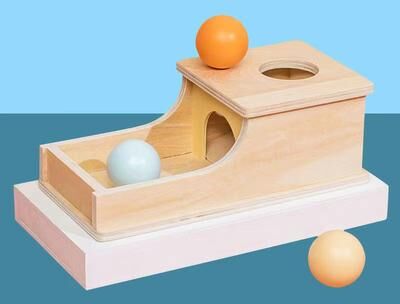
Tiny Tots Teens Trends Drawer Game Early Education Montessori Wooden Pitch Ball Box Preschool Learning Training Toy Drawer Game Early Education Montessori Wooden Pitch Ball Box Preschool Learning Training ToyThis Montessori Wooden Pitch Ball Box Drawer Game is a thoughtfully designed earlyeducation toy that transforms playtime into purposeful learning. Crafted for toddlers and preschoolers, it offers a handson, engaging way to support key developmental...39,97 $*Shipping: 0,00 $Secure redirect to the provider
-
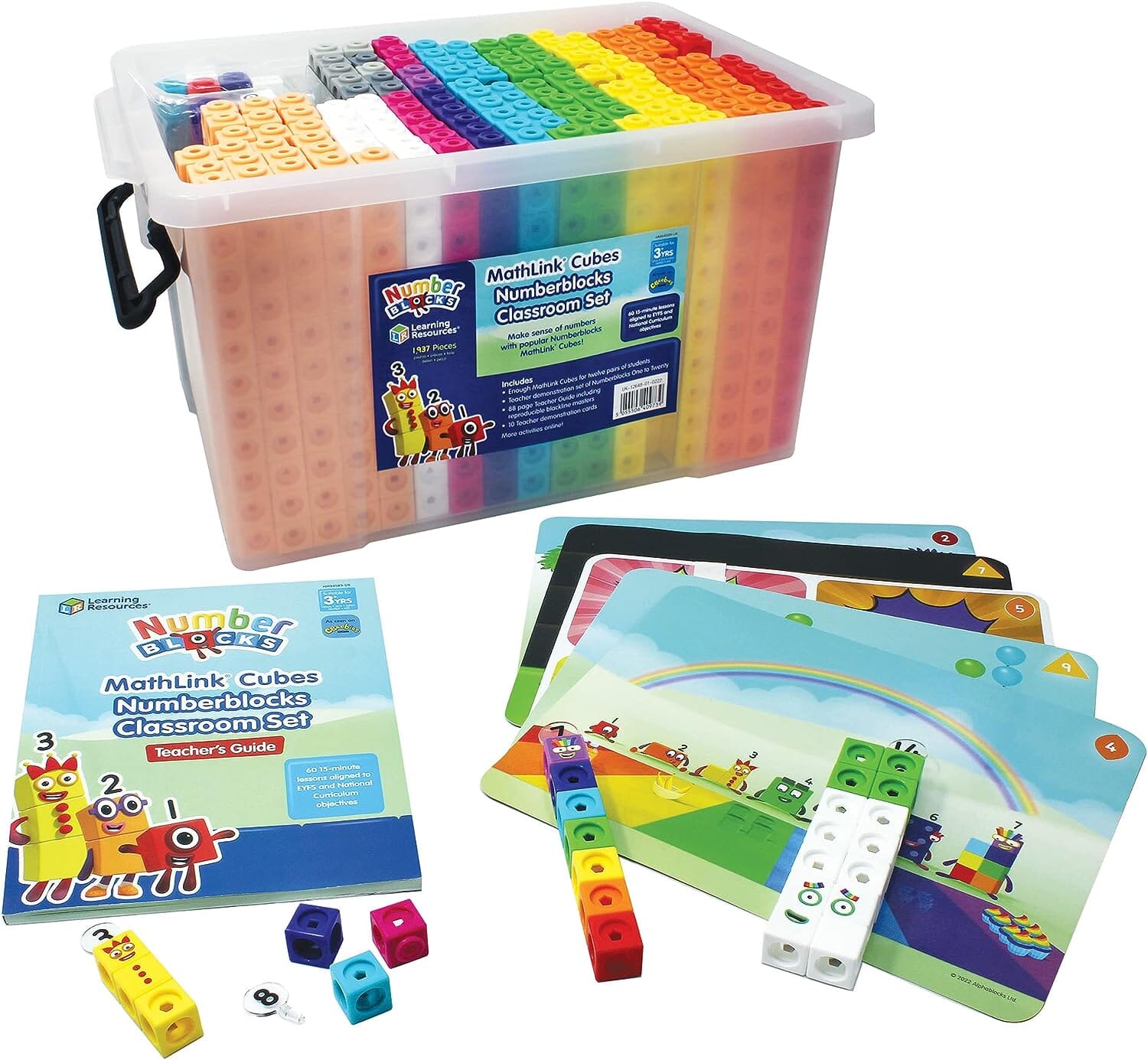
MathLink® Cubes Numberblocks Classroom Set - Ages 3+ - Educational Toy Learning ResourcesThis is the ultimate Numberblocks maths resources set developed to help teachers bring the maths concepts seen in the award-winning CBeebies TV series to life in the classroom. The set includes everything 12 pairs of pupils need to complete the 60 x 15-minute maths learning activities included in the comprehensive 88-page Teacher’s Guide. Activities align with the EYFS and National Curriculum objectives. The ultimate set for teachers to help children master maths by bringing the concepts shown in the award-winning TV series to life in the classroom. Developed to support maths learning in the classroom, this set uses the included comprehensive 88-page Teacher’s Guide to help children build essential early years maths skills including counting, place value, cardinality, subitising, composing and decomposing numbers, skip counting, addition, subtraction, and more for numbers 1-20. The quick and easy lessons incorporate group discussion and hands-on activities in 15 minutes. The Teacher’s Guide is split into three units. Unit one focuses on Numberblocks One to Five. Unit two focuses on Six to Ten, and unit three focuses on Eleven to Twenty. Lessons align with the EYFS and National Curriculum framework. The set has everything 12 pairs of pupils need to complete the activities featured in the Teacher’s Guide. Includes 1905 special edition Numberblocks MathLink Cubes, 20 Numberlings for One to Twenty, 5 double-sided demonstration cards, and the comprehensive Teacher’s Guide in a convenient storage tote.289,99 £*Shipping: 0,00 £Secure redirect to the provider

-
What is the motivation phase, elaboration phase, and conclusion phase?
The motivation phase is the beginning of a piece of writing where the writer introduces the topic and captures the reader's interest. This phase aims to establish why the topic is important and why the reader should continue reading. The elaboration phase follows, where the writer provides more in-depth information, examples, and evidence to support their main points. Finally, the conclusion phase is where the writer summarizes the main points, restates the thesis, and leaves the reader with a lasting impression or call to action. **
-
How can one incorporate their own opinion in the written elaboration of the GFS (referat)?
One can incorporate their own opinion in the written elaboration of the GFS (referat) by clearly stating their perspective on the topic and providing supporting evidence or examples to back up their opinion. It is important to use language that clearly indicates that the information being presented is the writer's opinion, such as using phrases like "I believe," "in my opinion," or "from my perspective." Additionally, it is important to acknowledge and address opposing viewpoints to demonstrate a well-rounded understanding of the topic. Overall, incorporating one's own opinion in the written elaboration of the GFS involves presenting a clear and well-supported perspective while acknowledging and addressing alternative viewpoints. **
-
What is the question regarding GFS (Equivalent Determination of Student Performance) regarding continuous text and elaboration?
The question regarding GFS (Equivalent Determination of Student Performance) regarding continuous text and elaboration is how to accurately assess and measure a student's understanding and mastery of a particular subject or topic through written responses. This involves evaluating the student's ability to provide detailed explanations, examples, and analysis in their writing, as well as their coherence and organization of ideas. Educators must consider the depth of the student's understanding, critical thinking skills, and ability to communicate effectively through continuous text and elaboration when using GFS to determine student performance. **
-
What is the question regarding the GFS (Equivalent Determination of Student Performance) concerning continuous text and elaboration?
The question regarding the GFS concerning continuous text and elaboration is how well students can demonstrate their understanding and knowledge through written responses. This aspect of the GFS assesses students' ability to provide detailed explanations, examples, and arguments to support their ideas. It aims to evaluate students' critical thinking skills, communication abilities, and depth of understanding on a given topic. **


What is the question regarding the GFS (Equivalent Determination of Student Performance) regarding continuous text and elaboration?
The question regarding the GFS (Equivalent Determination of Student Performance) regarding continuous text and elaboration is likely focused on how well students can express their ideas and thoughts in a cohesive and detailed manner. It may inquire about the students' ability to provide thorough explanations, examples, and supporting details to strengthen their arguments or responses. This question aims to assess students' proficiency in constructing well-developed and coherent written responses that effectively convey their understanding of the subject matter. **
Should one learn teaching before teaching learning?
It is important to have a solid understanding of teaching methods and strategies before embarking on the journey of teaching others. Learning how to effectively communicate information, engage students, and assess their understanding are essential skills that can be acquired through formal education or training in teaching. By learning teaching techniques first, one can better support the learning process and create a more effective and engaging learning environment for their students. **
Top-Angebote
Products related to Elaboration:
-
Perfect Picks Market Kids Learning Clock Silent Analog Teaching Wall Clock For Classroom & Bedroom Inch black 8 InchTransform learning into an exciting daily adventure with this Kids learning clock designed to help children master time with confidence. Featuring colorful numbers, clearly marked hands, and an easytoread analog display, it's perfect for young...54,97 $*Shipping: 0,00 $Secure redirect to the provider
-
JoyToys Montessori Wooden Learning Clock Time Teaching Puzzle For Kids Montessori Wooden Learning Clock Time Teaching Puzzle For KidsLearn through play with our wooden learning clock, designed to help children confidently understand time while developing essential early learning skills. This engaging Montessori clock combines handson puzzle play with interactive time practice,...29,97 $*Shipping: 0,00 $Secure redirect to the provider
-
Scholastic Teaching Resources Sight Word Readers Classroom Box SetJumpstart reading success with this irresistible collection of 125 little books that introduce and reinforce the first 50 must-know sight words! Each set includes a sturdy storage box stocked with 5 copies of 25 delightful tales—each presenting two...101,99 $*Shipping: 0,00 $Secure redirect to the provider
-
Perfect Picks Market Montessori Reusable Learning Cards Set For Kids Early Education Writing Practice Game Montessori Reusable Learning Cards Set For Kids Early Education Writing Practice GameTurn everyday learning into a fun, handson experience with these Montessori toys designed to spark curiosity and creativity. This engaging set of reusable cards helps young children build essential skills through play, making it perfect for early...39,97 $*Shipping: 0,00 $Secure redirect to the provider
-
What is the handout elaboration on evolution up to now?
The handout elaboration on evolution up to now has covered the basic principles of evolution, such as natural selection, genetic variation, and adaptation. It has also discussed the evidence for evolution, including fossil records, comparative anatomy, and molecular biology. Additionally, the handout has explored the mechanisms of evolution, such as genetic drift, gene flow, and mutations. Overall, the handout has provided a comprehensive overview of the theory of evolution and how it explains the diversity of life on Earth. **
-
What is the motivation phase, elaboration phase, and completion phase?
The motivation phase is the initial stage where individuals are inspired or driven to start a task or project. It involves setting goals, identifying reasons for taking action, and building momentum. The elaboration phase is where the details and plans are fleshed out, strategies are developed, and resources are gathered to move forward with the task. The completion phase is the final stage where the task is finished, goals are achieved, and outcomes are evaluated. It involves wrapping up loose ends, celebrating successes, and reflecting on the process. **
-
What is the motivation phase, elaboration phase, and conclusion phase?
The motivation phase is the beginning of a piece of writing where the writer introduces the topic and captures the reader's interest. This phase aims to establish why the topic is important and why the reader should continue reading. The elaboration phase follows, where the writer provides more in-depth information, examples, and evidence to support their main points. Finally, the conclusion phase is where the writer summarizes the main points, restates the thesis, and leaves the reader with a lasting impression or call to action. **
-
How can one incorporate their own opinion in the written elaboration of the GFS (referat)?
One can incorporate their own opinion in the written elaboration of the GFS (referat) by clearly stating their perspective on the topic and providing supporting evidence or examples to back up their opinion. It is important to use language that clearly indicates that the information being presented is the writer's opinion, such as using phrases like "I believe," "in my opinion," or "from my perspective." Additionally, it is important to acknowledge and address opposing viewpoints to demonstrate a well-rounded understanding of the topic. Overall, incorporating one's own opinion in the written elaboration of the GFS involves presenting a clear and well-supported perspective while acknowledging and addressing alternative viewpoints. **
Similar search terms for Elaboration
-
Tiny Tots Teens Trends Drawer Game Early Education Montessori Wooden Pitch Ball Box Preschool Learning Training Toy Drawer Game Early Education Montessori Wooden Pitch Ball Box Preschool Learning Training ToyThis Montessori Wooden Pitch Ball Box Drawer Game is a thoughtfully designed earlyeducation toy that transforms playtime into purposeful learning. Crafted for toddlers and preschoolers, it offers a handson, engaging way to support key developmental...39,97 $*Shipping: 0,00 $Secure redirect to the provider
-
MathLink® Cubes Numberblocks Classroom Set - Ages 3+ - Educational Toy Learning ResourcesThis is the ultimate Numberblocks maths resources set developed to help teachers bring the maths concepts seen in the award-winning CBeebies TV series to life in the classroom. The set includes everything 12 pairs of pupils need to complete the 60 x 15-minute maths learning activities included in the comprehensive 88-page Teacher’s Guide. Activities align with the EYFS and National Curriculum objectives. The ultimate set for teachers to help children master maths by bringing the concepts shown in the award-winning TV series to life in the classroom. Developed to support maths learning in the classroom, this set uses the included comprehensive 88-page Teacher’s Guide to help children build essential early years maths skills including counting, place value, cardinality, subitising, composing and decomposing numbers, skip counting, addition, subtraction, and more for numbers 1-20. The quick and easy lessons incorporate group discussion and hands-on activities in 15 minutes. The Teacher’s Guide is split into three units. Unit one focuses on Numberblocks One to Five. Unit two focuses on Six to Ten, and unit three focuses on Eleven to Twenty. Lessons align with the EYFS and National Curriculum framework. The set has everything 12 pairs of pupils need to complete the activities featured in the Teacher’s Guide. Includes 1905 special edition Numberblocks MathLink Cubes, 20 Numberlings for One to Twenty, 5 double-sided demonstration cards, and the comprehensive Teacher’s Guide in a convenient storage tote.289,99 £*Shipping: 0,00 £Secure redirect to the provider
-
Perfect Picks Market Kids Emotional Expression Mirror Early Education & Emotional Learning Toy For Toddlers pinkNurture your childs emotional intelligence with the Kids Emotional Expression Mirrora fun, interactive learning tool designed to help toddlers understand and manage their feelings. This innovative toy features six emotional expression cards and a...49,97 $*Shipping: 0,00 $Secure redirect to the provider
-
Perfect Picks Market Kids Learning Clock Silent Analog Teaching Wall Clock For Classroom & Bedroom Inch white 8 InchTransform learning into an exciting daily adventure with this Kids learning clock designed to help children master time with confidence. Featuring colorful numbers, clearly marked hands, and an easytoread analog display, it's perfect for young...54,97 $*Shipping: 0,00 $Secure redirect to the provider
-
What is the question regarding GFS (Equivalent Determination of Student Performance) regarding continuous text and elaboration?
The question regarding GFS (Equivalent Determination of Student Performance) regarding continuous text and elaboration is how to accurately assess and measure a student's understanding and mastery of a particular subject or topic through written responses. This involves evaluating the student's ability to provide detailed explanations, examples, and analysis in their writing, as well as their coherence and organization of ideas. Educators must consider the depth of the student's understanding, critical thinking skills, and ability to communicate effectively through continuous text and elaboration when using GFS to determine student performance. **
-
What is the question regarding the GFS (Equivalent Determination of Student Performance) concerning continuous text and elaboration?
The question regarding the GFS concerning continuous text and elaboration is how well students can demonstrate their understanding and knowledge through written responses. This aspect of the GFS assesses students' ability to provide detailed explanations, examples, and arguments to support their ideas. It aims to evaluate students' critical thinking skills, communication abilities, and depth of understanding on a given topic. **
-
What is the question regarding the GFS (Equivalent Determination of Student Performance) regarding continuous text and elaboration?
The question regarding the GFS (Equivalent Determination of Student Performance) regarding continuous text and elaboration is likely focused on how well students can express their ideas and thoughts in a cohesive and detailed manner. It may inquire about the students' ability to provide thorough explanations, examples, and supporting details to strengthen their arguments or responses. This question aims to assess students' proficiency in constructing well-developed and coherent written responses that effectively convey their understanding of the subject matter. **
-
Should one learn teaching before teaching learning?
It is important to have a solid understanding of teaching methods and strategies before embarking on the journey of teaching others. Learning how to effectively communicate information, engage students, and assess their understanding are essential skills that can be acquired through formal education or training in teaching. By learning teaching techniques first, one can better support the learning process and create a more effective and engaging learning environment for their students. **
* All prices are inclusive of VAT and, if applicable, plus shipping costs. The offer information is based on the details provided by the respective shop and is updated through automated processes. Real-time updates do not occur, so deviations can occur in individual cases. ** Note: Parts of this content were created by AI.